
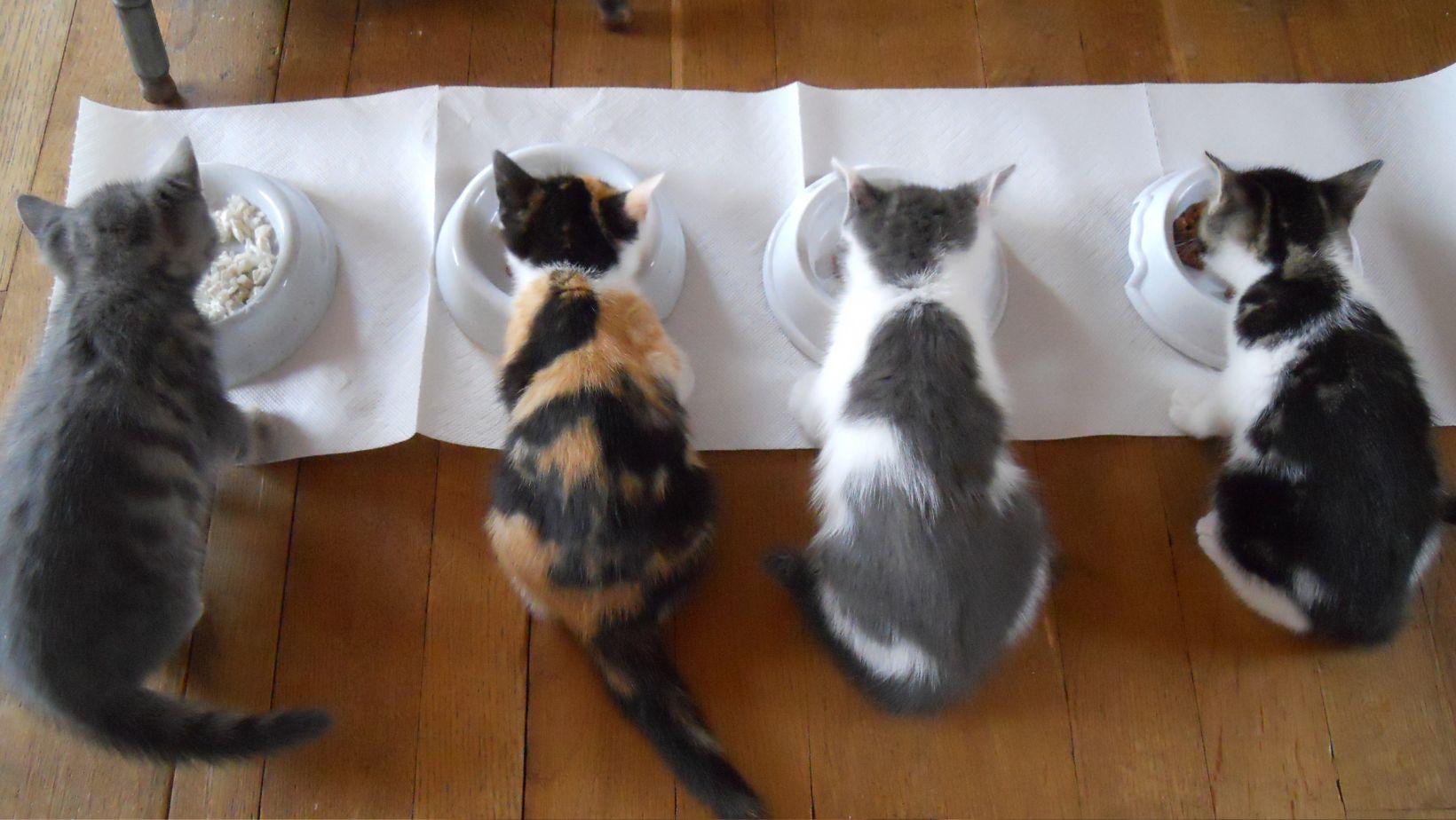
A good kitten feeding station has a predictable location, clean equipment, and a routine that every caregiver understands. A crowded kitchen can support that arrangement if meals are kept away from door swings, hot appliances, and the main walking route. When considering a British Longhair kitten from Happy Paws US, ask about its current food and routine before designing a new setup around the kitchen.
The kitten’s needs should guide the arrangement. An attractive bowl stand does not solve inconsistent portions or a feeding spot repeatedly blocked by a laundry basket. Begin with a few practical decisions, then make the station easy for the household to maintain.
Choose a location that stays available
Watch the kitchen during breakfast and dinner preparation. Notice where people carry hot pans, open the refrigerator, or move stools. A bowl that seems out of the way at noon may sit directly in a busy route at six in the evening.
Choose a place where the kitten can approach and leave without being crowded. Keep the feeding area apart from the litter setup. In a household with more than one pet, plan how each animal will eat without being displaced or having its food taken.
Cat Friendly Homes’ guide to feeding cats discusses feeding locations and individual access to resources. Use that guidance to consider the wider layout rather than assuming all pets should share one compact row of bowls. If space or competition makes the arrangement difficult, ask the veterinary team for help.
Keep the initial food routine recognizable
Obtain the exact product name and current feeding instructions before homecoming. Photograph the packaging if that is the easiest way to avoid confusion. Two foods from the same brand can have different formulations, and a familiar-looking bag does not necessarily contain the same product.
Arrange an appropriate supply and discuss changes with the veterinarian. Do not redesign the diet merely to suit an attractive storage jar or a social media trend. A feeding station is an organizational tool, not a substitute for choosing a nutritionally appropriate food.
Cornell’s guide to feeding cats explains the importance of food suited to the animal’s life stage. For a growing kitten, use the veterinary team’s advice and the product information to establish a suitable plan. Coat length alone is not a reason to add supplements or prepare a homemade diet.
Make portions clear to every adult
Write the agreed meal amount and schedule where caregivers can find it. Use a consistent measuring method. A note that says “one scoop” is useful only if there is one clearly identified scoop and everyone fills it the same way.
Keep treats in the plan. It is easy for several people to offer a small snack without realizing that others have done the same. A simple household check-in can prevent repeated feeding while leaving room for appropriate rewards and play activities.
For a busy family, a small meal log may be enough:
|
Meal |
What the caregiver records |
|
Morning |
Time offered and whether the kitten ate as usual |
|
Midday if scheduled |
The person responsible and amount offered |
|
Evening |
Food served and any notable change |
|
Treats |
What was given within the agreed plan |
Adapt the rows to the actual veterinary guidance. The table is a communication aid, not a universal schedule for every kitten.
Set up a clean preparation routine
Keep a dedicated scoop or utensil for pet food and make it easy to wash. Avoid using the food bowl to scoop directly from a bag. Store the cleaning items and spare bowls where another adult can find them without searching through the kitchen.
The FDA’s pet food handling guidance offers a concise starting rule:
“Begin and end with clean hands.”
The same guidance covers cleaning bowls and utensils, safe storage, and handling unused food. Follow the product’s instructions as well. Set up the station so that these steps are easy to repeat during a rushed morning, not only when there is time for a thorough kitchen reset.
Keep cleaning chemicals securely stored and follow their directions around food surfaces. If a mat or bowl is being cleaned, provide a suitable clean replacement rather than leaving the kitten without access to its normal resources. A spare set can make that routine much easier.
Store food so its identity remains clear
Retain the original packaging and product information. The product name, batch details, and expiry date may be useful if there is a question or recall. Decanting everything into an unlabelled decorative container can make that information difficult to recover.
Choose a storage location that meets the label’s conditions and cannot be accessed by the kitten. Avoid a place beside a hot appliance or where moisture accumulates. If you use a larger container around the original package, clean and maintain it appropriately rather than continually adding new food onto old residue.
Check supplies before they run out. Keep a realistic reorder reminder so a delayed delivery does not force an abrupt improvisation. A small household inventory is enough: the product in use, the unopened supply, and the next purchase date.
Plan for the coat without making meals complicated
A British Longhair’s coat may need attention around ordinary daily care, but the feeding station should still be straightforward. Observe whether the bowl is comfortable to use and whether food repeatedly collects on the coat. Bring persistent problems to the veterinarian or groomer rather than changing several things at once.
Keep the surface beneath the bowl easy to inspect and clean. A mat should lie securely and dry properly after washing. Avoid elaborate decorations that make it difficult to see spilled food or create places where crumbs accumulate.
Do not add unprescribed oils, vitamins, or other products to improve coat appearance. Discuss skin or coat concerns with the veterinary team. Nutrition advice should reflect the whole animal and its current diet, not a promise printed on a product sold as a beauty supplement.
Notice changes without turning meals into a test
Use the feeding routine to notice whether the kitten behaves as usual. If appetite changes meaningfully, contact the veterinarian for guidance rather than cycling through foods in an attempt to solve the problem yourself. Explain what changed, when it started, and whether anything else is different.
Avoid standing over the kitten throughout every meal or repeatedly moving the bowl to check interest. A stable setting makes observation easier. Record a concern clearly, then follow the veterinary team’s advice about the next step.
When a sitter or relative takes over, share the current version of the plan and demonstrate it. Remove old instructions so the kitchen does not contain competing schedules. One clear routine is easier for both the kitten and the people feeding it.
Does a kitten need a special designer bowl
The bowl needs to be suitable, stable, cleanable, and comfortable for that kitten. Appearance is secondary. Observe how the animal uses it and ask the veterinary team if feeding seems difficult.
Should all pets eat together for companionship
Do not assume that they prefer this. Each animal needs reliable access to appropriate food. Plan the layout and supervision around the individuals rather than a neat arrangement for a photograph.
What is the most useful upgrade
For many households, the first improvement is clearer communication: an identified food, a consistent measure, a clean spare bowl, and a record of who fed the kitten. Those simple changes make a feeding station useful every day.