
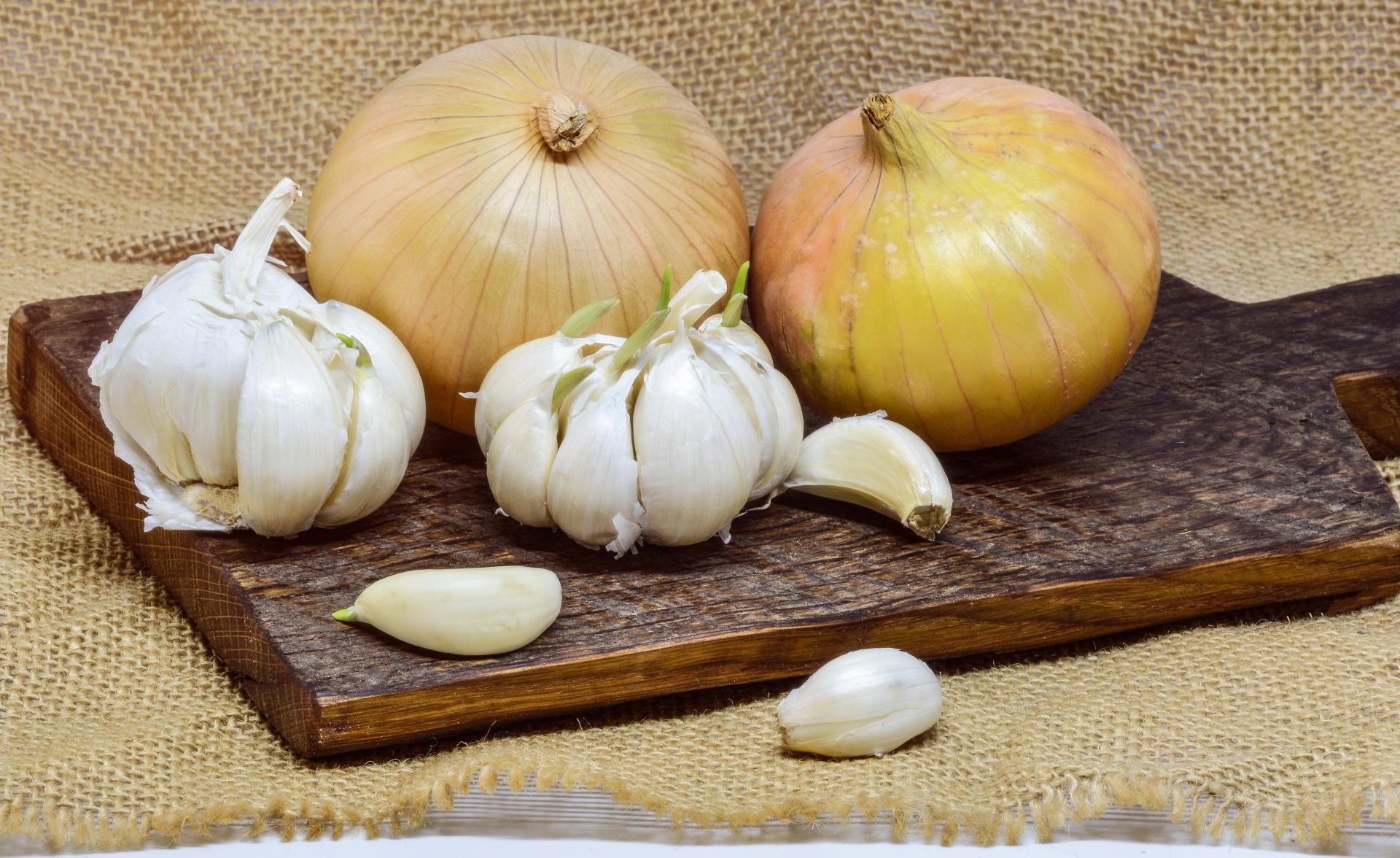
Onion and garlic show up in virtually every cuisine on the planet. They’re foundational to flavor in ways that are genuinely hard to work around, and for people with IBS or FODMAP sensitivities, they also tend to be among the most reliable triggers for bloating, cramping, and digestive chaos. The standard advice is to cut them out. But that advice skips over something important: understanding exactly why onion and garlic cause problems for so many people, and whether broad elimination is actually the most effective or sustainable response.
The short answer is that the issue isn’t FODMAPs as a category. It’s a specific compound within that category, fructans, combined with what happens when fructans reach the colon undigested. Understanding that distinction opens up more targeted and less restrictive options for managing symptoms.
FODMAPs Are Not One Thing
The term FODMAP is an acronym: Fermentable Oligosaccharides, Disaccharides, Monosaccharides, and Polyols. It groups together a range of short-chain carbohydrates that share a common trait, they’re poorly absorbed in the small intestine and ferment rapidly when they reach the colon.
What the acronym obscures is that these are actually quite different compounds that behave differently in the body and affect different people in different ways. Lactose is a disaccharide found in dairy. Fructose is a monosaccharide concentrated in certain fruits and sweeteners. Polyols are sugar alcohols found in stone fruits and some artificial sweeteners. Oligosaccharides include two distinct subcategories: fructo-oligosaccharides, also called fructans, and galacto-oligosaccharides, or GOS.
Onion and garlic are high in fructans. Not lactose. Not fructose. Not polyols. Fructans specifically. This matters because the mechanism of the problem and the potential solutions are specific to that compound.
For those who want to understand how enzyme supplementation addresses fructan digestion and FODMAP sensitivities more broadly, go here to explore the research and product options in depth before deciding on an approach.
What Fructans Are and Why They’re Hard to Digest
Fructans are chains of fructose molecules with a glucose unit at the end. The human body doesn’t produce the enzyme needed to break these chains apart, which means fructans pass through the small intestine largely intact. This isn’t a dysfunction or a deficiency, it’s simply how human digestion works. Nobody efficiently digests fructans on their own.
For people without IBS, this typically isn’t a significant problem. The fructans reach the colon, gut bacteria ferment them, gas is produced, and the process causes minimal discomfort. For people with IBS, and particularly those with visceral hypersensitivity, the fermentation process creates enough gas pressure and colonic activity to cause real, sometimes severe symptoms. The gut is more reactive, not the fructans more potent.
This is why two people can eat the same garlic-heavy pasta and have completely different experiences. One person notices nothing. The other is uncomfortable for hours. The difference isn’t the food; it’s the gut’s response to the fermentation that follows.
The Fermentation Process: What’s Actually Happening
When fructans arrive in the colon, the resident bacterial community treats them as food. Bacterial fermentation of fructans produces hydrogen gas, methane (in some people), and short-chain fatty acids. The gas accumulates faster than it can be expelled or absorbed, creating distension. The short-chain fatty acids, while beneficial in many contexts, also accelerate colonic transit and draw water into the bowel.
For a gut with normal sensitivity, this process is largely unremarkable. For a gut with IBS, the distension triggers pain signals from hypersensitive visceral receptors, motility shifts into urgency mode, and what was a normal physiological process becomes a symptomatic episode.
The key insight here is that the problem is fermentation of an undigested substrate. If the fructans could be broken down before reaching the colon, the fermentation cascade wouldn’t happen. This is exactly the premise behind enzyme-based intervention.
Targeted Enzyme Support: The Case for Specificity
The enzyme that breaks down fructans is called inulinase, sometimes referred to as fructanase. It cleaves the fructose chains into individual units that can be absorbed in the small intestine, removing the fermentable substrate before it reaches the colon. No substrate, no fermentation. No fermentation, no gas accumulation, no distension, no symptom cascade.
A similar principle applies to alpha-galactosidase, the enzyme that breaks down GOS, the fructan-adjacent oligosaccharides found in legumes and cruciferous vegetables. This enzyme has been studied and used in supplement form for decades, most recognizably in products designed to reduce gas from bean consumption. The mechanism is identical: enzymatic digestion in the small intestine prevents colonic fermentation.
Lactase, which addresses lactose intolerance, follows the same logic. The reason lactase supplementation works for many people is not that it treats a disease but that it supplies what the small intestine lacks, allowing digestion to complete before the problematic compound moves further down.
Applied specifically to onion and garlic sensitivity, targeted fructanase supplementation offers a mechanistically sound intervention. Rather than eliminating the trigger food, the goal is to eliminate the trigger compound at the point where it would otherwise escape digestion.
Broad Elimination: What It Gets Right and Where It Falls Short
The low-FODMAP elimination diet was developed as a diagnostic tool, and in that context it’s genuinely valuable. Removing high-FODMAP foods for a defined period and observing symptom improvement gives useful information about whether FODMAPs are a significant driver of an individual’s IBS. The subsequent reintroduction phase, where food groups are tested systematically, is designed to identify which FODMAP categories are actually problematic for that person.
The problem arises when elimination becomes the permanent strategy rather than the diagnostic phase. Broad FODMAP elimination removes a large number of nutritionally valuable foods, including many prebiotic fiber sources that feed beneficial gut bacteria. Extended elimination has been associated with reductions in microbiome diversity, which may actually worsen gut function over time. And practically speaking, strict FODMAP elimination is socially and logistically demanding in ways that become unsustainable for most people across months and years.
There’s also a precision problem. Telling someone with fructan sensitivity to avoid all FODMAPs is like telling someone with a peanut allergy to avoid all legumes indefinitely, without ever testing whether chickpeas or lentils are actually a problem. The blanket restriction may be safe, but it’s not optimized, and the downstream effects of unnecessarily restricting a wide range of food categories carry their own costs.
Enzyme Support Versus Elimination: A Practical Comparison
The choice between targeted enzyme supplementation and dietary elimination isn’t necessarily either-or, but understanding how they compare in practice is useful.
Elimination provides certainty through absence. If the trigger food is never consumed, the trigger compound never enters the digestive system. For people with severe, consistent reactions, this certainty has real value during a diagnostic phase or in high-stakes situations where a symptomatic episode would be particularly disruptive.
Enzyme supplementation provides flexibility through intervention. It works best when used consistently and in advance of eating, because the enzymes need to be present in the small intestine when the food arrives. It doesn’t offer the same guarantee that elimination does, particularly with very high-fructan loads like a dish built almost entirely around raw onion. But it expands the range of foods that are practically manageable and reduces the burden of constant vigilance.
For most people navigating real-world eating, a combination approach tends to work best. A working understanding of which FODMAP categories are personally triggering, combined with enzyme supplementation to extend tolerance for moderate exposures, allows for meaningful dietary flexibility without abandoning symptom management entirely.
Why Garlic Is Especially Difficult
Garlic warrants specific attention because it presents a disproportionately high fructan concentration relative to its serving size. A small amount of garlic provides a significant fructan load, which is why people with IBS often find that even garlic-infused oils (which contain flavor compounds but not fructans, since fructans don’t dissolve in fat) are better tolerated than actual garlic cloves.
This specificity is instructive. The problem with garlic is not the sulfur compounds that give it its flavor. It’s not the allicin. It’s the fructans. Cooking garlic reduces but doesn’t eliminate fructan content. Fermented and black garlic have somewhat different profiles but are not universally well tolerated. Understanding garlic as a fructan delivery vehicle rather than simply a “bad food” leads to much more nuanced and useful management strategies.
Getting More Specific With Your Approach
The broader point across all of this is that managing IBS through nutrition works better when it’s built on specificity rather than blanket restriction. Knowing that your main trigger is fructan fermentation rather than FODMAP foods as a category changes what interventions make sense, which foods can stay in the diet, and where enzyme supplementation is most likely to help.
The research on fructanase and alpha-galactosidase as digestive supplements is still developing compared to the more established evidence base for lactase, but the mechanistic rationale is solid and real-world experience among IBS-focused practitioners and patients has been broadly positive. For a condition as variable and personally specific as IBS, targeted approaches will almost always outperform broad ones over the long term.