
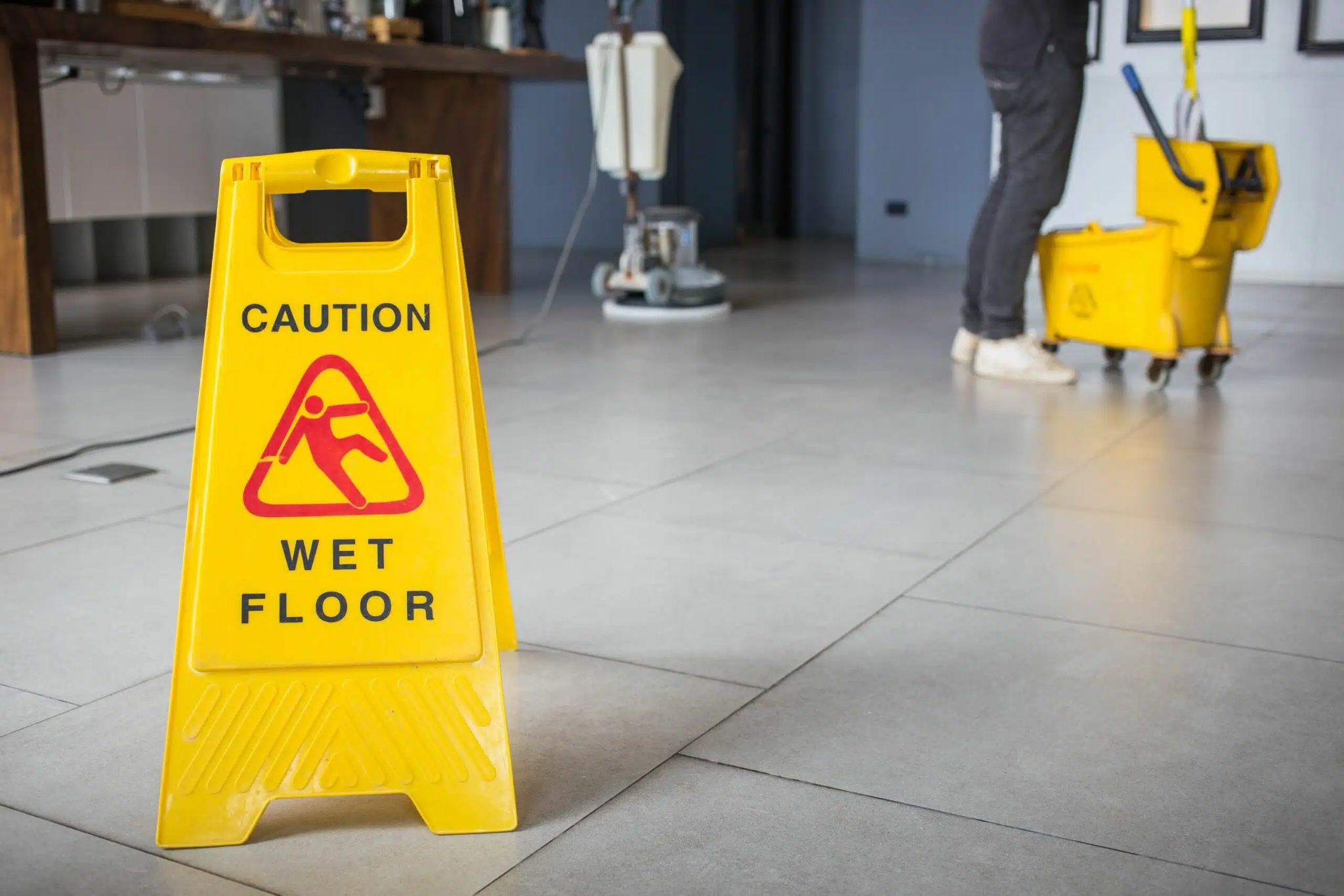
A wet floor may seem like a simple problem, but it can lead to serious injuries when customers, tenants, or visitors are not warned in time. Slips can cause broken bones, head injuries, back trauma, knee damage, shoulder injuries, and long recoveries.
For businesses, wet floor hazards can become legal trouble when the danger was created, ignored, or left unaddressed for too long. The key issue is often whether the business acted reasonably once it knew, or should have known, that the floor was unsafe.
Wet Floors Are Common but Still Dangerous
Wet floors happen for many reasons. Rain may be tracked inside, drinks may spill, refrigeration units may leak, employees may mop, or plumbing problems may leave water where customers walk.
Because these hazards are common, businesses are expected to anticipate them. A store, restaurant, lobby, or office cannot always prevent every wet floor, but it should have practical procedures for finding and addressing them quickly.
A Spill Can Become a Liability Problem
A business is not automatically liable the moment a spill happens. If a customer drops a drink and another person slips seconds later, the business may not have had a fair chance to respond.
The situation changes when the spill remains long enough that employees should have noticed it. If staff walk past the hazard, ignore complaints, or fail to inspect busy areas, the business may face responsibility for the injury.
Mopping Without Warnings Can Backfire
Cleaning is supposed to make a property safer, but careless mopping can create a new danger. A freshly mopped floor may look clean while still being slippery enough to cause a fall.
Businesses should use clear warnings, cones, barriers, or temporary closures when floors are wet from cleaning. If employees mop an area and leave without warning customers, the business may have created the very hazard that caused the injury.
Rainy Entrances Need Extra Attention
Entrances can become slippery quickly during rain or snow. Water gets tracked inside by shoes, umbrellas, carts, strollers, and delivery traffic, creating slick flooring near doors and walkways.
Businesses may need mats, warning signs, frequent inspections, and prompt cleanup during bad weather. A wet entrance is often predictable, which means a business may have less room to claim it was surprised by the hazard.
Warning Signs Are Not Always Enough
A wet floor sign can help warn customers, but it does not automatically protect a business from liability. The warning must be visible, properly placed, and meaningful under the circumstances.
If the sign is hidden, too far from the hazard, knocked over, or left in place so long that employees stop paying attention, it may not be enough. A business may still need to clean the hazard, block the area, or guide customers around it.
Inspection Routines Can Make or Break the Case
In a wet floor case, one major question is how often the business checked the area. A busy grocery aisle, restaurant walkway, restroom, or lobby may need more frequent attention than a low-traffic corner.
A Brooklyn slip and fall attorney may look at inspection logs, cleaning schedules, employee assignments, and surveillance footage to determine whether the business had a reasonable system for catching wet floor hazards.
Leaks and Recurring Puddles Are Hard to Excuse
Some wet floor hazards are not one-time accidents. A leaking freezer, dripping ceiling, faulty air conditioner, broken pipe, or recurring puddle near an entrance may create repeated danger.
When a business knows a wet spot keeps returning, temporary cleanup may not be enough. The business may need to repair the source of the water, increase inspections, or restrict access until the hazard is fixed.
Employee Knowledge Can Matter
Employees are often the first to see wet floor hazards. They may notice a spill, hear a customer complaint, walk through a wet area, or know that a certain spot becomes slippery every day.
If employees knew about the danger before the fall, that knowledge may be tied to the business. The question becomes what they did after learning about the hazard and whether their response was reasonable.
Surveillance Video Can Tell the Timeline
Video footage can be powerful in wet floor cases because it may show when the liquid appeared, who walked past it, whether employees noticed it, and whether warning signs were present.
This evidence can disappear quickly if it is not preserved. Many camera systems overwrite footage within days or weeks, so early action is important after a slip-and-fall accident.
Businesses May Blame the Customer
After a fall, a business or insurance company may argue that the customer should have seen the wet floor, walked more carefully, or avoided the area. This is a common defense.
However, a wet floor may be hard to see, especially if the liquid is clear, the lighting is poor, or the customer’s attention was reasonably focused elsewhere. The business’s responsibility does not disappear simply because it claims the hazard was obvious.
Injuries From Wet Floors Can Be Serious
A wet floor fall can lead to painful injuries, including:
- Hip, wrist, shoulder, back, head, or knee injuries
- Fractures
- Concussions
- Ligament tears
- Spinal pain
- Long-term mobility problems
These injuries can affect work, daily routines, childcare, transportation, and independence. Medical records can help connect the fall to the harm that followed.
Records That May Support a Claim
Helpful evidence may include photos of the wet floor, witness statements, incident reports, medical records, cleaning logs, repair records, surveillance footage, and prior complaints about the same area.
Shoes worn during the fall may also matter because insurers sometimes question footwear. Preserving evidence early can help prevent the business from controlling the story after the scene has changed.
When a Wet Floor Becomes More Than a Spill
Wet floor hazards create legal trouble when a business fails to respond reasonably. The danger may come from a spill, leak, cleaning process, weather, or recurring maintenance problem.
The strongest cases usually show that the business had notice, created the condition, or failed to follow basic safety procedures. When a wet floor injury could have been prevented with reasonable care, the business may be held accountable for the harm that followed.