
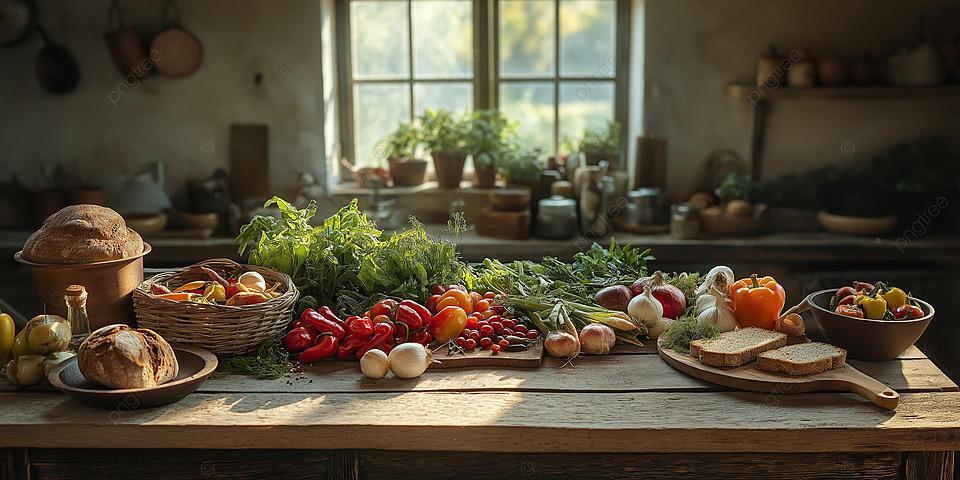
Have you ever wondered how food is produced and what the ingredients actually go through before they reach your fridge or your table? That is, before they are transformed into safe and consumable products? The fact that you are here tells me that you have most likely been thinking about this, for one reason or another, and that you are interested in better understanding this complex journey from farm to fork, so to speak.
Now, as you may have guessed it, the process of food production definitely involves multiple stages, all of which are designed so as to ensure safety, quality, efficiency, as well as sustainability. What you want to do now is get a better understanding about those particular stages, either because you are curious, or because you are involved in the food industry yourself, and you want to understand the actual process. The exact number of stages can sometimes vary depending on the products and the system, but there is a food production model that involves seven stages specifically, and we are now going to talk about those in a bit more details.
1. Raw Material Sourcing
Unsurprisingly, it all starts with, well, sourcing the actual raw materials that have to be processed into foods. Primary production, as you may understand already, involves activities such as planting, as well as growing and harvesting crops, or raising animals and collecting raw resources, and it is the stage that sets the foundations for the entire food chain in general. So, the first stage begins at the actual source, including fisheries, farms, livestock operating and similar.
2. Post-Harvest Handling and Sorting
Okay, once those food products are harvested, they have to be handled carefully in order not to spoil or get contaminated. And that brings us to the post-harvest handling and sorting stage, which consists of grading, cleaning, sorting, as well as storing raw materials. This process is critical because a lot of materials, and especially meat, fruits, and vegetables, tend to be highly perishable, which is why proper techniques have to be used in order to preserve their freshness and extend their shelf life, such as refrigeration, controlled atmosphere storage, drying and similar. Read more on food processing in general.
3. Inspecting the Raw Materials
Before the materials enter the actual processing facility, they have to be carefully inspected and undergo strict quality control checks. This is how it is ensured that only those ingredients that are safe and compliant can proceed further. So, the ingredients are tested for contamination, their temperature and pH levels are verified, and they are checked for compliance with specifications. If some materials fail these checks, they are rejected.
4. Preparing for Processing
After the inspection is completed, the raw materials will have to be prepared for the actual processing stage. This means they will have to be washed, peeled, cut, and any unwanted components have to be removed. As it is probably perfectly clear to you already, the preparation stage ensures that the food is clean, uniform, as well as, of course, ready for transformation. This is sure to also reduce microbial contamination, as well as to improve efficiency in the later stages.
5. Processing
Now we have come to the core stage of food production. Basically, this is the stage in which the raw ingredients are actually transformed into finished or semi-finished products. The process can involve a wide range of techniques, from cooking, baking, or frying to fermentation, freezing, drying, pasteurization or sterilization, or similar. And, food processing is often categorized in primary, secondary and tertiary processing, with different types of products being created by different types of these processes.
6. Packaging and Labeling
Once the ingredients have been processed, the food products are ready to be packaged and protected from spoilage, damage or contamination. Packaging helps preserve freshness and extend shelf life, while it also facilitates transportation and provides the necessary info to the consumers. Labeling is clearly just as important, offering details such as nutritional values, ingredients, expiration dates and similar.
7. Storage, Distribution and Delivery
We have come to the final stage. As you can see by now, it is important for this entire process to be done efficiently and successfully, which is why the design of your facility is clearly important. Now, for example, DeJong Consulting is a leader in food plant design, so working with them can help you understand how to create an efficient, hygienic and a scalable production environment. The point is that the layout of the food processing plant is important for the entire process.
Including, of course, the very last stage. That is the stage of storing the finished products, as well as delivering them to retailers, or food service providers, or sometimes directly to consumers. This is where warehousing, cold chain logistics, transportation and retail distribution are done, and efficiency is, clearly, the key to success.